A targeted email list isn't just a spreadsheet of contacts. It is a carefully cultivated group of people who are genuinely interested in what you have to say. Think of it as the difference between shouting into a random crowd and having a meaningful conversation with a friend. This approach is all about quality over quantity. It ensures your messages land with an audience that's actually excited to engage and, ultimately, buy.
Why a Targeted List Is Your Best Growth Engine
Let's get one thing straight: in email marketing, bigger is rarely better. The old-school obsession with a massive subscriber count usually leads to a bloated, unresponsive list. This tanks your deliverability and wastes your time. The real magic happens when you build a smaller, laser-focused audience that genuinely wants to hear from you.
A targeted email list is a true business asset. It gives you a direct, reliable line to your ideal customers. This is a connection you own, free from the ever-changing moods of social media algorithms. When you own your list, you own your traffic.
From Vanity Metrics to Predictable Revenue
Chasing subscriber numbers feels good, but it's a vanity game. Real, sustainable growth comes from nurturing relationships that generate predictable revenue. A list of 1,000 passionate fans who open every email is far more valuable than a list of 50,000 contacts who barely remember signing up and rush to hit the spam button. This difference is stark.
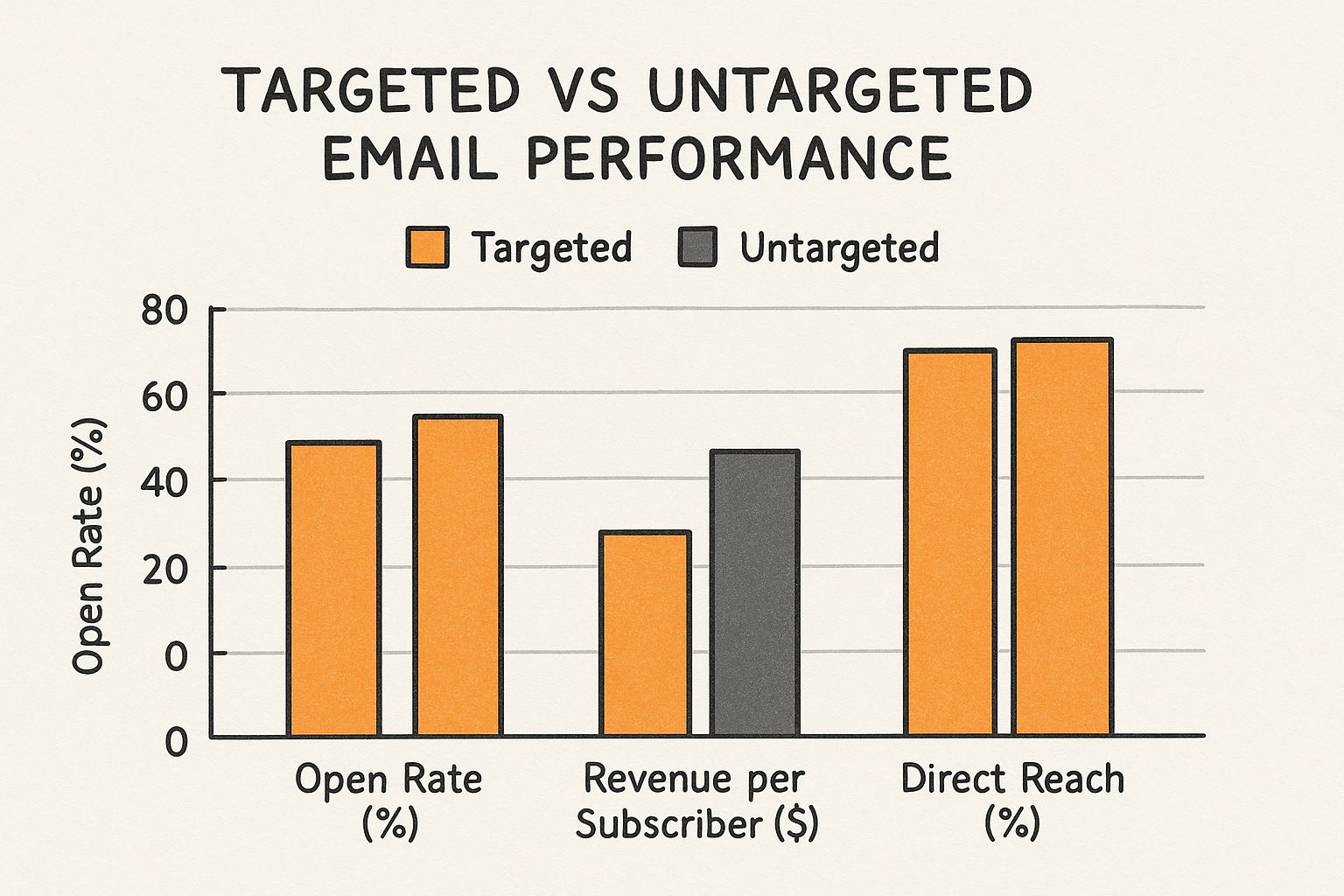
This infographic lays out the stark contrast in performance between a targeted list and a generic, untargeted one.
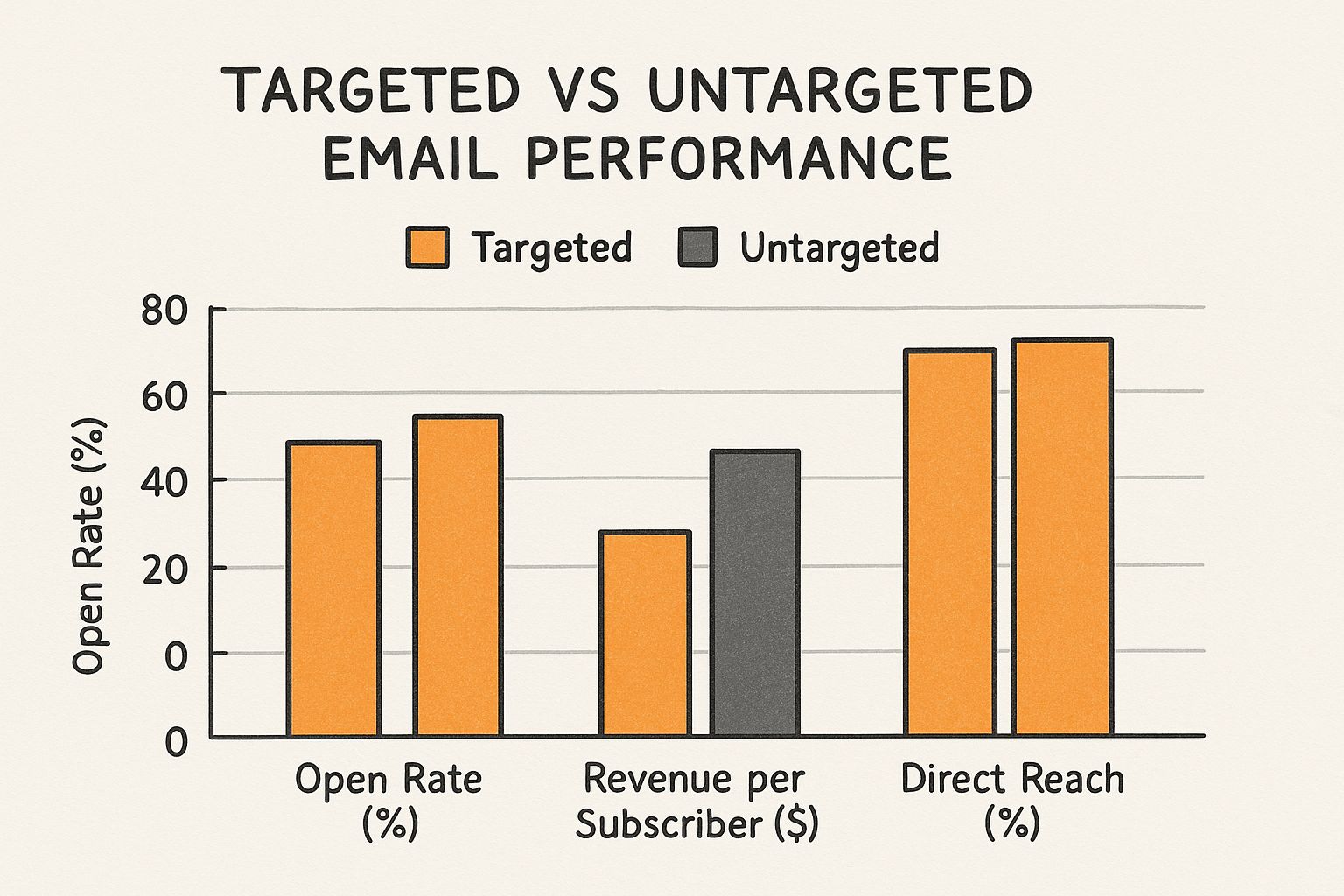
The numbers don't lie. Targeted lists blow generic ones out of the water on every metric that actually matters. This includes opens, clicks, and the revenue you earn per subscriber.
It’s pretty straightforward when you think about it. Sending relevant, valuable content to people who asked for it builds trust. That trust directly translates into higher open rates and better click-through rates. Ultimately, it leads to more sales.
A targeted list creates a powerful feedback loop. Engaged subscribers share your content, refer new customers, and give you priceless feedback to improve your products. It becomes a self-sustaining engine for growth.
To really see the difference, let’s compare these two approaches side-by-side.
Generic List vs. Targeted List A Quick Comparison
This table breaks down the core differences in strategy, engagement, and results between a generic, untargeted email list and a well-curated targeted one. The contrast is clear.
| Attribute | Generic Email List | Targeted Email List |
|---|---|---|
| Growth Strategy | Quantity at all costs; "spray and pray" | Quality first; attracts ideal customers |
| Content Approach | One-size-fits-all broadcasts | Personalized and segmented messages |
| Subscriber Interest | Low to non-existent; high unsubscribe rates | High and genuine; low unsubscribe rates |
| Engagement | Poor open/click rates; hurts deliverability | Excellent open/click rates; boosts deliverability |
| Business Outcome | Unpredictable results, low ROI | Predictable revenue, high ROI, brand loyalty |
As you can see, the path to predictable growth and loyal customers clearly runs through building a targeted list.
The Unmatched Reach of Email
Despite all the noise about new platforms, email remains one of the most direct and powerful ways to reach people. Around the world, 4.6 billion people use email, and that number is expected to hit over 4.8 billion by 2027. More importantly, research consistently shows that 60% of consumers prefer getting brand communications through email. You can find more email marketing statistics that highlight its ongoing dominance if you want to dive deeper.
This direct line to the inbox is your superpower. It lets you:
- Bypass Algorithms: Your message lands right where you want it. It goes into the subscriber's inbox, not buried in a chaotic social feed.
- Build Lasting Loyalty: Consistent, valuable communication forges relationships that go far beyond a single purchase. This is crucial for long-term success.
- Drive Reliable Sales: A targeted email list becomes a dependable source of revenue for product launches, special promotions, and important announcements.
In short, when you invest in building a targeted email list, you're not just collecting contacts. You are building a stable, profitable asset. This gives you a serious competitive advantage and long-term security.
Attracting High-Quality Subscribers from Day One
The secret to a powerful email list isn't just about numbers. It's about getting the right people on it from the very beginning. This process starts way before you even think about hitting 'send' on a campaign. It all comes down to your initial offer.
Forget those generic, one-size-fits-all "free downloads." Sure, they might get you a lot of sign-ups, but they attract everyone. This means they attract no one of real value. Your goal should be to create hyper-specific lead magnets that act as a natural filter, pulling in your ideal customers and gently pushing away those who aren't a good fit.
This form, for example, makes a clear, direct promise. That clarity is key. When you offer a specific benefit, you ensure people subscribe with a solid understanding of the value they're about to get. This simple step sets the stage for much higher engagement down the road.
Creating Lead Magnets That Filter and Attract
Think of your lead magnet as the start of a conversation. What's one specific, urgent problem your ideal customer is facing right now that you can solve for them? Your answer is the foundation of an offer they can't refuse.
Here are a few practical ideas to get you thinking:
- Role-Specific Templates: A SaaS company could offer a "CFO’s Guide to Q3 Budgeting" instead of a vague ebook. This move instantly qualifies the lead as a financial decision-maker.
- Niche Industry Checklists: An agency working with DTC brands could create a "Pre-Black Friday E-commerce Site Audit Checklist." This is a magnet for store owners who are actively planning for the biggest sales event of the year.
- Micro-Courses: A consultant could build a free 3-day email course on "Mastering LinkedIn for B2B Lead Generation." This practical format attracts professionals who are genuinely serious about leveling up their skills.
These focused resources do so much more than just capture an email address. They automatically segment your audience from the get-go. The person who downloads the CFO guide is in a completely different bucket than the one who grabs a marketing template.
The best lead magnets solve a small, specific problem completely. They give your new subscriber an immediate win, building trust and establishing you as an authority from that very first interaction.
Strategic Placement for Maximum Impact
Your offer is only half the battle. Where you place your opt-in forms is just as critical. Context is king. Slapping the same generic form on every page of your site is a massive missed opportunity. You need to match the offer to the content.
For instance, if you have a blog post detailing a customer's success story, embed a form right within that post offering a more in-depth case study download. It’s a seamless and logical next step for anyone reading. This is a very practical tactic.
Another killer technique is using exit-intent popups on specific, high-value articles. If someone is reading a deep-dive on a particular topic and moves to leave, a well-timed popup offering a resource that goes even deeper can be incredibly persuasive.
This kind of strategic placement transforms your website from a static brochure into a dynamic lead-capturing machine. Each page becomes a targeted entry point. This ensures your targeted email list is filled with engaged, high-intent people from the very beginning.
If you're looking to really dial this in, exploring professional lead generation services can give you a more advanced playbook for supercharging your list growth.
Using Segmentation to Create Personalized Experiences
Getting the right people on your email list is a major victory. But the real magic begins when you acknowledge that this list isn't just one big, faceless group. Sending the same generic email to everyone is a surefire way to get ignored. It's like shouting into a crowded room and hoping the right person hears you. This is where segmentation comes in, turning your list from a simple asset into a revenue-driving powerhouse.
At its core, segmentation is just the practice of dividing your email list into smaller, more focused groups based on what they have in common. This simple act lets you stop broadcasting and start having thousands of one-on-one conversations. The whole point is to make every single email feel like it was written just for the person reading it.
From Simple Demographics to Powerful Behaviors
You can start slicing up your list in a few practical ways. You don't have to get super complicated right away. You can begin with the basics and layer on more sophisticated data as you go.
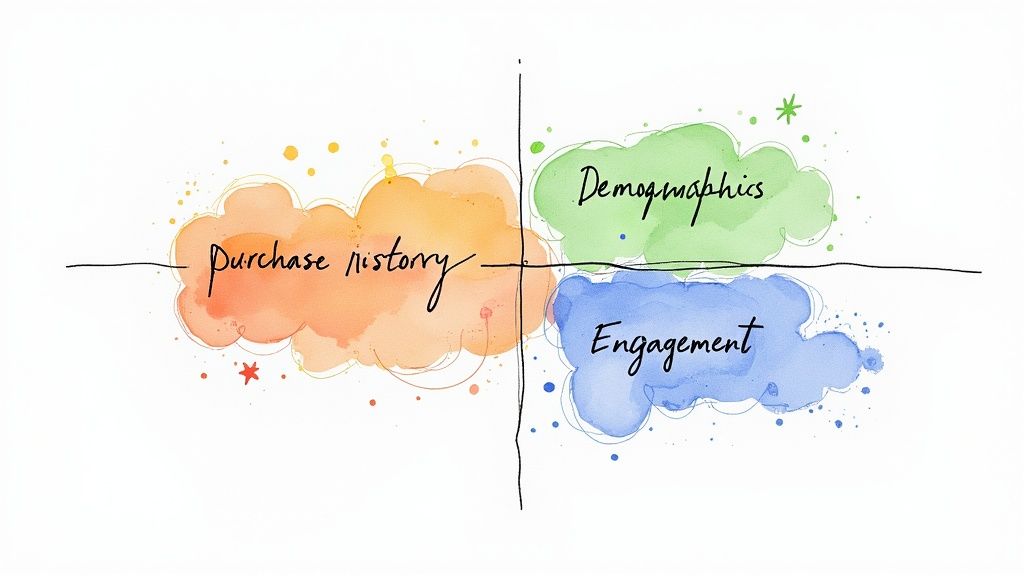
- Demographic Segmentation: This is the most common starting point. You can group subscribers by things like age, location, or gender. For example, a clothing retailer isn't going to get very far sending a promotion for its new line of men's suits to everyone on its list.
- Engagement Level Segmentation: Who are your biggest fans? Who's drifting away? By creating segments for your most active subscribers (the ones who open and click on everything) and your inactive ones, you can reward your loyal followers and run targeted campaigns to win back those who've gone quiet.
- Behavioral Segmentation: This is where things get really interesting. You start grouping people based on the actual things they've done. What have they bought? Which pages on your site have they visited? What content have they downloaded? It’s a direct line into what they care about most.
Here's a look at how a platform like Mailchimp lets you build these segments using different rules and conditions based on your subscriber data.
By mixing and matching these conditions, you can create incredibly specific audiences. This ensures your message always hits the mark.
A Real-World Segmentation Example
Let's say you run an e-commerce store selling outdoor gear. A customer, Alex, just bought a top-of-the-line tent. Instead of just lumping him in with everyone else, you automatically add him to a "Serious Campers" segment.
A month later, you have a new shipment of premium sleeping bags and hiking boots. You send an email only to the "Serious Campers" segment with an exclusive 15% discount. The message feels personal. It lines up perfectly with Alex's interests. This makes him far more likely to buy again. That's the power of a well-segmented, targeted email list.
Segmentation transforms your email marketing from a loudspeaker into a precision tool. It ensures the right message reaches the right person at the right time, dramatically increasing its impact and your ROI.
The proof is in the numbers. Marketers who use segmented campaigns report as much as a 760% increase in email marketing revenue. These targeted emails can also see 30% higher open rates and 50% higher click-through rates simply because the content is far more relevant. For more stats on this, you can discover more insights about email personalization on Omnisend.com. When you personalize the experience, you're not just selling. You're building a relationship that drives real growth.
Advanced Tactics for List Growth and Refinement
Once you've got the basics down, it’s time to get serious. Growing a truly powerful email list isn’t just about getting more subscribers. It's about attracting the right subscribers and making sure your existing list stays healthy and responsive.
This means shifting your strategy from simple lead magnets to more creative, engaging incentives. It also demands a disciplined approach to list maintenance.
Think beyond the static PDF download. The real magic happens when you create interactive experiences that deliver immediate, personalized value.
Interactive and High-Value Lead Generation
To draw in the best leads, you need to offer something they can't ignore. Things like webinars, quizzes, and referral programs are absolute powerhouses for building a high-quality targeted email list. Why? Because they require a higher level of buy-in from the very beginning.
- Interactive Quizzes or Assessments: Instead of a generic guide, try a quiz like "What's Your Marketing Blind Spot?" In exchange for their email, users get instant, personalized results. This is a brilliant two-for-one. You get a new subscriber and immediately segment them based on their answers, giving you valuable data from day one.
- High-Value Webinars: Hosting a live or automated webinar on a very specific topic instantly positions you as an expert. The people who take the time to register are showing a genuine, pressing interest in what you have to say. These are some of the most qualified leads you'll ever find.
- Referral Programs: Why not turn your best subscribers into your best marketers? Set up a simple program that rewards them for referring new, qualified leads. The reward could be anything from an exclusive guide to a special discount. This approach uses powerful social proof to grow your list with people who are a natural fit.
These methods are so effective because they feel like a genuine value exchange. They are not a one-sided transaction. You’re providing a memorable and genuinely useful experience, not just asking for an email address.
The Critical Importance of List Refinement
A rapidly growing subscriber count feels great. But if you don't actively manage that list, its effectiveness will wither over time. This is where list cleaning, often called "list hygiene," comes in. It's the simple practice of regularly removing inactive and invalid email addresses.
Don't think of it as shrinking your list. Think of it as improving its potency.
Letting unengaged subscribers linger on your list does more than just skew your metrics. It actively harms your sender reputation, making it harder for your emails to reach the inboxes of people who actually want to hear from you.
Ignoring your list’s health is one of the most common—and costly—mistakes in email marketing. A cluttered list inevitably leads to lower open rates. It causes higher bounce rates and a greater risk of being marked as spam. All of these are red flags for email providers like Gmail and Outlook, which can seriously damage your overall deliverability.
Launching a Re-Engagement Campaign
Before you hit the delete button on a subscriber, it's always worth trying to win them back. A re-engagement campaign is a short, targeted email sequence. It is sent to anyone who hasn't opened or clicked an email in a while (say, 90 days).
The goal is simple. Remind them why they signed up in the first place and give them a good reason to stay.
A typical, practical campaign might look like this:
- A "Still Interested?" Email: Start with a direct, friendly message asking if they still want your emails. A simple one-click "Yes, keep me on the list!" button works wonders here.
- A High-Value Offer: For the next email, send them your absolute best piece of content. This could be a surprise discount, or an exclusive resource you don't offer anywhere else. It can be enough to reignite their interest.
- The "Last Chance" Email: Be clear and respectful. Let them know you'll be removing them from your active list if they don't take action. This creates a bit of urgency while also respecting their inbox if your content is no longer a good fit.
Knowing how to craft these messages is crucial. If you want to dive deeper, you can learn more about the specific email marketing tactics that still work in 2025 to really sharpen your skills.
If a subscriber still doesn't engage after that final attempt, it's time to let them go. Removing them keeps your list clean, your sender score high, and ensures you're only talking to people who truly want to listen.
Measuring What Actually Moves the Needle
Your targeted email list isn't just a collection of contacts. It's a living, breathing engine for your business. But to get the most out of it, you have to look past the vanity metrics. Open rates are nice to know, but they don't pay the bills.
The real magic happens when you connect your email efforts directly to your bottom line. Tracking the right key performance indicators (KPIs) is the only way to prove your work is paying off. It also helps you make smart decisions that will actually grow your revenue.
Stop Guessing and Start Measuring
If you want a crystal-clear view of your list's health and profitability, you need a dashboard. This dashboard should focus on action and financial results. These are the numbers that tell the real story.
Here’s what I always keep a close eye on:
- Conversion Rate: This is the big one. It's the percentage of subscribers who actually did the thing you wanted them to do. That could be buying a product, booking a demo, or downloading a resource. It answers the question: "Did it work?"
- Click-Through Rate (CTR): While an open is nice, a click is a commitment. CTR tells you how many people were genuinely engaged by your message enough to take the next step. It's a fantastic gauge of your content's relevance.
- Revenue Per Subscriber (RPS): This is your ultimate profitability metric, plain and simple. Just divide the total revenue from a campaign by the number of people who received it. This number tells you exactly what each subscriber is worth to your business.
- List Growth Velocity: This isn't just about how many new subscribers you get. It is about the rate at which high-quality leads are joining. A steady upward trend here means your lead magnets and sign-up forms are hitting the mark.
Focusing on these KPIs shifts your perspective from "who's reading?" to "who's buying?" Strong engagement also directly impacts your sender reputation. Consistently poor numbers can hurt you in the long run. They make it harder to even land in the inbox. We've put together a whole guide on how to improve email deliverability to help you keep your list in top shape.
To make this easier, I've put together a table of the core metrics you should have on your dashboard. This isn't just about tracking data. It's about understanding the story that data is telling you about your business.
Key Metrics for Your Targeted Email List Dashboard
| Metric | What It Measures | Why It's Important |
|---|---|---|
| Conversion Rate | Percentage of subscribers taking a desired action (e.g., purchase, sign-up). | Directly ties email activity to business goals and revenue. |
| Click-Through Rate (CTR) | Percentage of recipients who clicked a link in your email. | Indicates content relevance and engagement level. |
| Revenue Per Subscriber (RPS) | Total campaign revenue divided by the number of subscribers. | The ultimate measure of your list's financial value. |
| List Growth Velocity | The rate of new, high-quality subscriber acquisition over time. | Shows the health of your lead generation and audience-building efforts. |
| Unsubscribe Rate | Percentage of recipients who opt-out after receiving an email. | A high rate can signal content mismatch or list fatigue. |
| Bounce Rate | Percentage of emails that couldn't be delivered. | High bounces hurt your sender reputation and signal a need for list cleaning. |
Keeping these numbers front and center will force you to think strategically about every email you send. This will move you from simply communicating to actively driving growth.
A Real-World Example of Small Tweaks, Big Wins
Let's look at a classic e-commerce scenario. Imagine you have a segment of customers who've bought hiking gear in the past. You're launching a new line of boots and decide to run a simple A/B test.
- Subject Line A: "New Hiking Boots Are Here!"
- Subject Line B: "Gear Up For Your Next Adventure, [FirstName]"
The results were immediate. Version B, which was personalized and focused on the benefit, crushed it. It scored a 40% higher click-through rate. That campaign drove 20% more revenue. A tiny, data-driven change led to a serious financial win.
A well-segmented email list is the perfect laboratory for optimization. You can run clean A/B tests on subject lines, CTAs, offers, and even send times to figure out exactly what works for your audience.
This is how you turn email marketing from a guessing game into a predictable system for growing your business. The potential payoff is huge. Projections for 2025 show that email marketing could deliver an average ROI of $36 for every $1 spent—a mind-boggling 3600% return. With the global email marketing industry on track to hit $11.3 billion, you can't afford not to optimize. You can find more on these email statistics at cloudhq.net.
Common Questions About Building a Targeted List
Even after years in the trenches of email marketing, some questions pop up again and again. Let's tackle a few of the most common hurdles marketers face when trying to build a list that actually performs. These are the practical, real-world issues that can make or break your email strategy.
A big one I always hear is, "How often should I actually clean my list?" While there's no single magic number, a solid rule of thumb is to do a deep clean every three to six months. This isn't just about tidying up. It is a crucial step to protect your sender reputation and stop paying to email people who've already checked out.
How Do I Re-Engage Inactive Subscribers?
Waking up "cold" subscribers is a delicate dance. If you come on too strong with a hard sell, you're just begging them to hit unsubscribe. The key is to gently remind them why they signed up in the first place.
I've seen a simple, three-email re-engagement campaign work wonders time and time again. This is a very practical approach.
- The Gentle Nudge: Kick things off with a low-pressure, almost personal question. Something like, "Still want to hear from us?" puts the ball in their court. It's a simple, effective start.
- The Value Bomb: Next, send them something undeniably awesome. This could be your most popular guide, an exclusive video tutorial, or a surprise discount they weren't expecting. The goal is to make it an offer that’s genuinely hard to refuse.
- The Respectful Goodbye: If you’re still hearing crickets, it’s time to let go. A final email saying you’ll be removing them from your list shows you respect their inbox. This is a professional courtesy.
This entire process is about rekindling a connection, not strong-arming a sale. It helps you pull some valuable subscribers back from the brink while respectfully parting ways with those who just aren't interested anymore.
Balancing list growth with list quality is the constant tightrope walk of email marketing. It’s tempting to never delete a subscriber, but a smaller, highly engaged targeted email list will always outperform a larger, unengaged one.
Don't forget, subscribers who never open your emails are more than just dead weight. They’re actively hurting your deliverability. Think of regular cleaning and thoughtful re-engagement campaigns as non-negotiable maintenance for a healthy, profitable email program.
Ready to turn your email list into your top revenue channel? The experts at Inbox Connect build powerful email and SMS marketing systems that drive real growth. Book a free 30-minute email audit today and get an actionable roadmap to boost your conversions.